
Quick Summary:
Choosing the right location is one of the most important decisions in real estate investment. A good property in a weak location may give poor returns, while a well-located property can attract buyers, tenants, and better resale value. Before investing, study connectivity, employment opportunities, infrastructure, schools, hospitals, rental demand, property prices, future development, legal conditions, safety, and overall quality of life. Do not choose a location only because a broker says that prices will increase. Research the area yourself and verify important information from official sources and qualified professionals.
Introduction
Real estate is one of the biggest investments many people make in their lifetime. Whether you are buying an apartment, independent house, commercial property, or plot of land, the location can strongly influence the property’s future value.
You may find two similar properties with almost the same size and features, but their prices and future demand can be very different simply because they are located in different areas.
This is why the common real estate saying “location, location, location” remains important.
A good location can provide better connectivity, access to schools and hospitals, employment opportunities, rental demand, and easier resale. However, a popular location is not automatically the best investment. Sometimes an expensive area may already have very high property prices and limited room for growth. On the other hand, an emerging area may offer better long-term potential if infrastructure and employment opportunities are developing.
Recent real estate research also shows the importance of infrastructure-led growth. Metro corridors, expressways, airports, roads, and other infrastructure can improve accessibility and influence housing demand.
The goal, therefore, is not simply to find a “famous” location. The goal is to find a location where current demand, future growth, affordability, and investment potential come together.
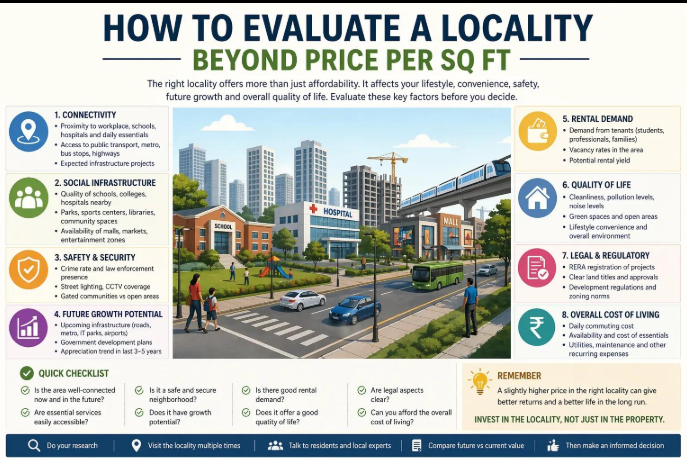
Why Location Matters in Real Estate Investment
Location affects almost every important part of a real estate investment.
It can influence:
- Property purchase price
- Rental income
- Tenant demand
- Resale demand
- Property appreciation
- Daily convenience
- Connectivity
- Construction and development activity
- Future infrastructure
- Overall quality of life
For example, a property located close to an employment centre may attract working professionals. A home near a good school may be more attractive to families. A property close to public transport may appeal to people who do not want to depend on private vehicles.
Research on rental markets also highlights the importance of proximity to workplaces, public transportation, schools, medical facilities, and other amenities.
This means investors should study the neighbourhood, not just the property.
1. Start With Your Investment Goal
Before choosing a location, decide why you are investing.
Your objective could be:
- Rental income
- Long-term price appreciation
- Resale profit
- Commercial income
- Building a house
- Buying land for future development
- A combination of rental income and appreciation
Different goals require different locations.
If your goal is rental income
Look for areas with:
- Employment hubs
- Colleges and universities
- Hospitals
- Business parks
- Good public transportation
- Affordable housing
- Strong tenant demand
If your goal is long-term appreciation
Look for:
- Upcoming infrastructure
- New employment centres
- Population growth
- Better roads and transport
- Planned commercial development
- Limited oversupply
- Improving social infrastructure
An upcoming locality can have strong potential, but it also carries greater risk. Legal due diligence, builder reputation, infrastructure delivery, and demand should be checked carefully.
2. Study Connectivity and Transportation
Connectivity is one of the first things you should examine.
Ask:
- How far is the nearest metro station?
- Are major roads easily accessible?
- Is public transport available?
- How long does it take to reach the main business areas?
- How far is the airport or railway station?
- Are roads wide and well maintained?
- Is traffic a major problem?
- Are new roads or transport projects planned?
A property that saves people time every day can become more attractive to both buyers and tenants.
However, do not simply believe advertisements claiming that a metro station or expressway is “coming soon.”
Check:
- Whether the project has actually been approved
- Whether construction has started
- Expected completion timeline
- Official project information
- Whether the property is genuinely close to the proposed infrastructure
Infrastructure can support real estate growth, but a proposed project should never be treated as a guaranteed future return.
3. Look for Employment Opportunities
People need homes close to where they work.
This makes employment one of the strongest drivers of residential demand.
When selecting a location, identify nearby:
- IT parks
- Business districts
- Industrial areas
- Government offices
- Hospitals
- Educational institutions
- Manufacturing centres
- Corporate offices
- Commercial zones
A location with several employment sources can be safer than an area dependent on only one company or one industry.
For example, if a locality has offices, educational institutions, hospitals, shopping areas, and industrial activity, it may attract different categories of residents.
This can help reduce the risk of weak rental demand.
4. Check Schools, Hospitals and Daily Amenities
A beautiful apartment is not enough.
People want convenience.
Check whether the locality has:
- Schools
- Colleges
- Hospitals
- Pharmacies
- Supermarkets
- Banks and ATMs
- Restaurants
- Parks
- Gyms
- Shopping centres
- Petrol stations
- Public transportation
Families often give special importance to schools and healthcare.
Tenants may prioritise public transportation and proximity to workplaces.
Older buyers may give more importance to hospitals, peaceful surroundings, and daily convenience.
Therefore, think about who will eventually buy or rent your property.

5. Study Current Property Prices
Never choose a location without understanding its current price level.
Compare:
- Price per square foot
- Apartment prices
- Plot prices
- Rental rates
- Resale prices
- Prices of nearby localities
- New-project prices
- Ready-to-move property prices
Do not compare only one property.
Try to study at least 5 to 10 comparable properties in the same micro-market.
For example, if a new apartment is advertised at a premium price, check whether similar ready-to-move properties nearby are available for less.
You should also compare the price based on carpet area, not just the total advertised area, wherever applicable.
A property’s headline price can sometimes look attractive until you calculate the actual usable space and additional charges.
6. Check Rental Demand
If you are investing for rental income, rental demand should be one of your biggest considerations.
Ask local brokers, property managers, existing landlords, and tenants:
- What type of tenants live here?
- How quickly do properties get rented?
- What is the average rent?
- How many properties are vacant?
- Which property sizes are most popular?
- Are tenants mostly students, families, or professionals?
- How much competition exists from new projects?
A locality may have expensive properties but weak rental demand.
Another area may have lower property prices and strong tenant demand.
The second option could sometimes provide a better rental yield.
Simple rental yield formula
Rental Yield = Annual Rental Income ÷ Property Purchase Price × 100
For example, if a property costs ₹60 lakh and generates ₹2.4 lakh in annual rent:
₹2.4 lakh ÷ ₹60 lakh × 100 = 4% gross rental yield
Remember that this is a simple gross calculation. Maintenance, property tax, repairs, vacancy, brokerage, loan interest, and other expenses can reduce the actual return.
7. Investigate Future Infrastructure
Future infrastructure can transform a locality.
Look for credible plans involving:
- Metro lines
- Highways
- Expressways
- Ring roads
- Railway connections
- Airports
- Business parks
- Industrial corridors
- Educational institutions
- Hospitals
- Commercial centres
Infrastructure development can improve accessibility and expand the areas where people are willing to live.
Research published in 2025 and 2026 has highlighted infrastructure-led micro-markets as important areas of residential activity in India.
But remember:
An announcement is not the same as completed infrastructure.
Do not pay a very high price today based only on a promise about what may happen five or ten years later.
8. Study Population and Demand Growth
A growing population can create additional demand for homes.
Look for signs such as:
- New apartment projects
- New offices
- More shops opening
- Increasing traffic
- New schools
- New hospitals
- More public transportation
- Rising rental demand
- New restaurants and services
However, rapid construction can also create oversupply.
If dozens of large projects are being built at the same time, future competition between landlords and sellers may increase.
Therefore, ask:
Is demand growing as fast as supply?
This is a much better question than simply asking whether the area is developing.
9. Check Safety and Quality of Life
Investors sometimes focus so much on returns that they forget about liveability.
Visit the area during:
- Morning
- Afternoon
- Evening
- Late night, where appropriate and safe to do so
- Weekdays
- Weekends
Look at:
- Street lighting
- Road conditions
- Traffic
- Noise
- Cleanliness
- Drainage
- Water availability
- Electricity reliability
- Parking
- Security
- Open spaces
- Pollution
- Flooding or waterlogging history
A location may look attractive during a daytime property visit but feel very different during peak traffic or heavy rain.

10. Research Legal and Regulatory Conditions
This is one of the most important steps.
A promising location is not enough if the property itself has legal problems.
Before purchasing, verify relevant documents and approvals with a qualified property lawyer or other appropriate professional.
Depending on the property, checks may include:
- Ownership/title documents
- Encumbrances
- Land-use permissions
- Building approvals
- Local authority approvals
- Property tax records
- Development permissions
- Occupancy/completion documents where applicable
- RERA registration where applicable
- Agreement and sale deed terms
For projects covered by RERA, verify the project’s registration and information through the relevant state RERA authority.
Never assume that a property is legally safe simply because a broker, seller, or developer says so.
Legal verification is an important part of responsible real estate investing. Industry guidance also recommends checking clear land titles, RERA registration where applicable, and required approvals before investing in emerging localities.
11. Check the Reputation of the Developer
If you are buying from a developer, research the developer’s track record.
Look at:
- Previous projects
- Delivery history
- Construction quality
- Customer complaints
- Legal disputes
- Maintenance quality
- Financial strength where reliable information is available
- Whether previous projects were delivered on time
Visit completed projects by the same developer if possible.
Speak with existing residents.
Ask them about:
- Construction quality
- Water supply
- Maintenance
- Electricity
- Security
- Promised amenities
- Builder support
- Association management
Real residents can sometimes provide information that advertisements do not show.
12. Compare the Location With Nearby Areas
Never study one locality in isolation.
Choose three to five nearby areas and compare them.
Create a simple comparison based on:
| Factor | Area A | Area B | Area C |
|---|---|---|---|
| Property price | |||
| Average rent | |||
| Metro/public transport | |||
| Employment nearby | |||
| Schools | |||
| Hospitals | |||
| Future infrastructure | |||
| Supply of new properties | |||
| Rental demand | |||
| Resale demand | |||
| Legal/project risks |
This simple exercise can reveal whether you are paying too much for a particular location.
13. Do Not Chase Only the Cheapest Location
Low price does not always mean good investment.
An extremely cheap property may be cheap because:
- Connectivity is poor
- Employment opportunities are limited
- Infrastructure is weak
- Rental demand is low
- Legal issues exist
- Water supply is unreliable
- Flooding is common
- Resale demand is weak
Instead of asking:
“Where can I buy the cheapest property?”
Ask:
“Where can I buy at a reasonable price in an area with sustainable demand?”
That change in thinking can make a major difference.
14. Look at Rental Yield and Capital Appreciation Together
Real estate returns can come from two major sources:
1. Rental income
Money received from tenants.
2. Capital appreciation
Increase in the property’s market value over time.
An investment may offer excellent appreciation but low rental income.
Another may offer good rent but slower price growth.
Your ideal combination depends on your financial goals, risk tolerance, loan obligations, and investment horizon.
Do not assume that a property with the highest rent automatically provides the highest total return.
15. Think About Resale Before You Buy
Ask yourself:
“If I had to sell this property three years from now, who would buy it?”
Then ask:
- Is the location attractive to families?
- Are professionals interested?
- Is public transport convenient?
- Is parking available?
- Is the property legally clear?
- Are there good schools and hospitals nearby?
- Is the society/building well maintained?
- Is the property reasonably priced compared with nearby options?
A property with a broad buyer base can be easier to resell.
16. Identify Red Flags
Be careful if you notice:
- Unrealistic promises of guaranteed returns
- Heavy pressure to book immediately
- Unclear ownership
- Missing approvals
- Poor road access
- Severe waterlogging
- No reliable public transport
- Too many vacant properties
- Excessive new supply
- Major infrastructure that exists only in advertisements
- Very high prices compared with nearby properties
- Poor developer track record
- Unusually low prices without a clear explanation
If something looks too good to be true, investigate before investing.
17. Use a Simple Location Scoring System
You can make your decision easier by giving each location a score out of 10.
For example:
| Factor | Weight |
|---|---|
| Connectivity | 20% |
| Employment demand | 15% |
| Rental demand | 15% |
| Social infrastructure | 10% |
| Property affordability | 10% |
| Future infrastructure | 10% |
| Resale potential | 10% |
| Safety and liveability | 5% |
| Legal/project quality | 5% |
Give every location a score from 1 to 10.
Then calculate the weighted score.
This does not guarantee that you will make a profitable investment, but it forces you to make a decision based on several factors instead of emotions.
18. Visit the Location Yourself
Online research is useful, but it cannot replace a physical visit.
Before investing, visit the location yourself.
Speak to:
- Residents
- Local shopkeepers
- Security guards
- Existing landlords
- Tenants
- Local property managers
- Nearby business owners
Ask simple questions:
“How is the water supply?”
“Does this area get waterlogged?”
“How is the rent demand?”
“How long do properties usually remain vacant?”
“How is the traffic?”
“Are there any major problems with this area?”
You may discover valuable information that does not appear in online listings.
19. Consider the Long-Term Picture
Real estate is usually a long-term investment.
Do not choose a location only because it is trending today.
Instead, ask:
- Will people still want to live here in 5–10 years?
- Will jobs continue to grow nearby?
- Will infrastructure improve?
- Will the population increase?
- Will the area remain affordable?
- Will there be too much future supply?
- Will the property remain attractive to renters?
- Will it be easy to resell?
A good investment location should have a reason for future demand, not simply current excitement.
Emerging localities can offer early-entry opportunities, but they generally require careful research and a longer investment horizon.
Common Mistakes Investors Should Avoid
Mistake 1: Buying only because the price is low
Cheap property can remain cheap if demand is weak.
Mistake 2: Believing every broker’s prediction
Always verify claims independently.
Mistake 3: Ignoring rental demand
If you plan to rent the property, study actual local rents and vacancy.
Mistake 4: Buying based only on future infrastructure
A proposed project can be delayed, changed, or cancelled.
Mistake 5: Ignoring legal checks
A great location cannot compensate for a legal problem.
Mistake 6: Not comparing nearby areas
You may find a better property just a few kilometres away.
Mistake 7: Making an emotional decision
Beautiful interiors and attractive amenities should not replace financial analysis.
Mistake 8: Ignoring total costs
Consider registration, taxes, maintenance, brokerage, loan costs, parking, interiors, repairs, and other expenses.
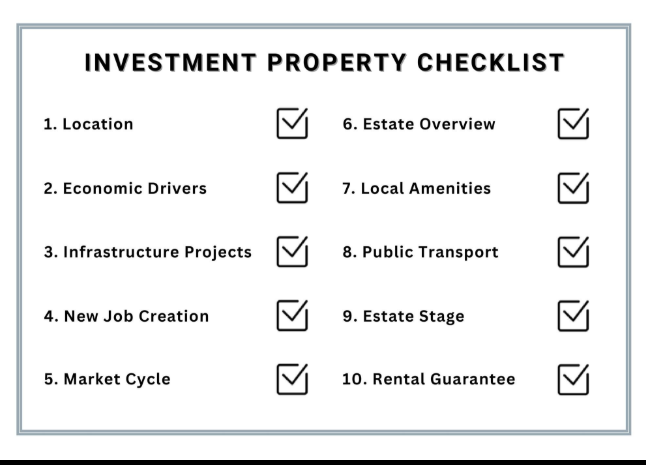
A Practical Property Location Checklist
Before finalising an investment, ask yourself:
- Is the location well connected?
- Is public transportation available?
- Are employment hubs nearby?
- Is rental demand strong?
- Are schools and hospitals accessible?
- Are shops and daily services nearby?
- Is the area safe and liveable?
- Are roads and drainage adequate?
- Is water supply reliable?
- Are future infrastructure plans credible?
- Is the current property price reasonable?
- Have I compared nearby locations?
- Is there too much new property supply?
- Is the developer trustworthy?
- Have I checked relevant legal documents?
- Is RERA registration applicable and verified?
- Have I visited the property personally?
- Is rental income realistic?
- Is resale demand likely to remain strong?
- Does the investment fit my budget and financial goals?
Final Thoughts
Choosing the best location for real estate investment is not about finding a place that is simply popular or expensive.
It is about finding a location with real and sustainable demand.
The strongest locations usually combine good connectivity, employment opportunities, social infrastructure, rental demand, reasonable pricing, future development, safety, and legal clarity.
Infrastructure can be a powerful growth driver, but it should be evaluated carefully rather than treated as a guaranteed source of appreciation. Current research on Indian real estate continues to show that infrastructure and connectivity can influence the performance of specific micro-markets.
The most important lesson is simple:
Do not buy a property first and then try to justify the location. Choose the location first, study the market, and then select the right property.
Take your time. Compare several locations. Visit them personally. Check actual rental and resale demand. Verify legal documents. Speak with residents. Research infrastructure from reliable sources. And make your final decision according to your own budget, investment horizon, and risk level.
A good location cannot guarantee profit, but careful location research can greatly improve the quality of your investment decision.
Key Pointers at a Glance
Remember these 10 points before investing:
- Define your investment goal before choosing an area.
- Prioritise connectivity to roads, metro, railway, airports, and workplaces.
- Look for employment growth because jobs create housing demand.
- Check schools, hospitals, shops, and other amenities.
- Study actual rental demand, not just advertised rent.
- Compare property prices with nearby localities.
- Research future infrastructure, but verify official progress.
- Check legal documents and RERA registration where applicable.
- Visit the locality personally at different times.
- Think about resale and long-term demand before buying.
E-E-A-T Note for Readers
This article is intended as general educational information about real estate location selection. Real estate laws, taxes, registration requirements, RERA rules, zoning regulations, and property documentation can vary by state, city, and property type.
For a real transaction, buyers should verify information with the relevant government authority, state RERA authority, property lawyer, chartered accountant, registered property professional, or other qualified expert as appropriate.
Important: Past property-price growth does not guarantee future returns. Infrastructure announcements, rental estimates, appreciation forecasts, and market trends should be independently verified before making an investment decision.
Sources consulted: Recent Indian real estate research and market guidance covering infrastructure-led growth, locality assessment, rental demand, and property due diligence.