
Important Note: This article is for general educational purposes. Commercial property laws, taxes, approvals, financing terms and RERA applicability can vary by state, property type and project. Always verify important documents with a qualified legal, tax and real estate professional before making a purchase.
Quick Summary
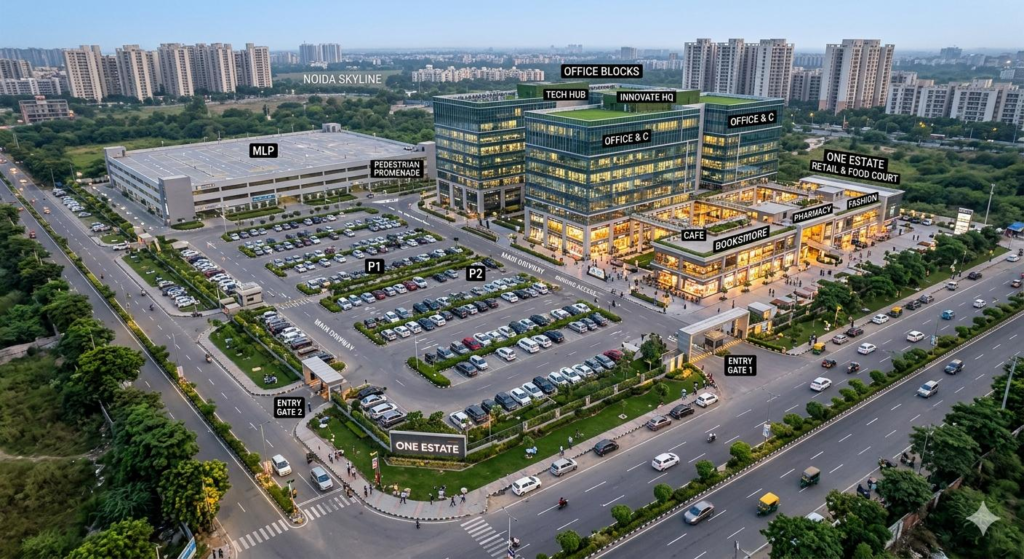
Commercial properties are real estate properties used mainly for business activities and income generation. They include offices, retail shops, showrooms, warehouses, industrial spaces and other business-use properties.
Before buying a commercial property, do not focus only on the expected rent or future price. A good commercial investment should be checked for:
- Location and business demand
- Property type and permitted use
- Title and ownership documents
- Government approvals and applicable registrations
- RERA status, where applicable
- Rental income and lease quality
- Tenant profile and vacancy risk
- Total purchase and operating costs
- Loan and cash-flow planning
- Exit and resale opportunities
The right commercial property can provide rental income and long-term growth. However, the wrong location, weak tenant demand or incomplete documents can create financial problems. Therefore, proper research and professional verification are very important.
What Are Commercial Properties?
Commercial properties are properties that are used for business, professional, industrial or income-generating activities. Unlike a residential home, which is mainly used for living, a commercial property is generally purchased or rented for business operations or investment income.
For example, a company may buy an office to run its business. A retailer may purchase a shop. An investor may buy a commercial unit and lease it to a business for monthly rent.
Commercial real estate can be attractive because it may offer higher rental income than some residential properties. However, it can also involve higher investment amounts, longer vacancy periods and more complicated legal and financial checks.
[IMAGE SPACE: Indian business owner and real estate consultant discussing commercial property investment options in a modern office]
Common Types of Commercial Properties
1. Office Spaces
Office properties are used by companies, professionals, startups and service businesses.
Examples include:
- Corporate offices
- Small office units
- Business centres
- IT offices
- Co-working spaces
- Professional offices
The value of an office property often depends on its location, connectivity, building quality, parking, maintenance and demand from businesses.
2. Retail Shops
Retail properties are used for businesses that sell products or services directly to customers.
Examples include:
- Street-facing shops
- Mall shops
- High-street retail spaces
- Grocery stores
- Boutiques
- Restaurants and cafés, subject to required approvals
Footfall is especially important for retail properties. A beautiful shop in a location with very few customers may not perform as well as a smaller shop in a busy market.
3. Showrooms
Showrooms are generally larger commercial spaces used to display products such as cars, furniture, electronics, fashion or other goods.
Good road visibility and easy access can be important factors.
4. Warehouses and Storage Spaces
Warehouses are used for storing products, inventory and business materials.
Demand may depend on:
- Highway connectivity
- Access to transport networks
- Loading and unloading space
- Ceiling height
- Road width
- Fire and safety requirements
- Distance from major business areas
5. Industrial Properties
Industrial properties are used for manufacturing, production and related activities. Buyers must carefully check land-use permissions and other applicable approvals before purchasing.
6. Commercial Plots
Commercial plots may be used for future business construction, depending on local planning rules and approved land use.
Never assume that land can be used for any commercial activity simply because it is located near a market or busy road. Always verify the official land-use permission and development rules.
Why Do People Invest in Commercial Properties?
Commercial real estate can offer several possible benefits.
Rental Income
A commercial property can generate regular income when leased to a suitable tenant. However, rent should never be treated as guaranteed unless it is supported by a valid lease and a financially reliable tenant.
Long-Term Value Growth
A property in a strong business location may increase in value over time. Growth can be influenced by:
- Infrastructure development
- New metro or transport connections
- Business expansion
- Population growth
- New employment hubs
- Better roads and connectivity
Portfolio Diversification
Some investors use commercial real estate to diversify their investments instead of keeping all their money in one asset type.
Business Use
A business owner may prefer owning a commercial property rather than paying rent for many years. However, buying is not automatically better than leasing. The decision depends on business needs, capital availability and future flexibility.

How to Choose the Right Commercial Property
Choosing a commercial property requires more than checking the building and negotiating the price. Below are the most important factors.
1. Understand Your Purpose Before You Buy
First, decide why you are buying the property.
Are you buying it:
- To run your own business?
- For rental income?
- For long-term investment?
- For future business expansion?
- To resell later?
Your purpose will help determine the right property type.
For example, a retail shop may be suitable for a clothing business but not for a logistics company. A warehouse may be useful for storage but may not be suitable for a customer-facing business.
Write down your requirements before visiting properties.
Consider:
- Required size
- Budget
- Preferred location
- Parking needs
- Customer access
- Future expansion
- Expected rental income
- Loan requirements
2. Choose the Location Carefully
Location is one of the most important factors in commercial real estate.
A good location depends on the type of business.
For Retail Properties
Check:
- Daily footfall
- Visibility from the road
- Nearby businesses
- Customer demographics
- Parking availability
- Competition
- Public transport access
For Office Properties
Check:
- Metro and road connectivity
- Distance from major business hubs
- Availability of employees
- Parking
- Building reputation
- Internet and digital connectivity
- Nearby restaurants and services
For Warehouses
Check:
- Highway access
- Transport routes
- Loading space
- Road width
- Truck movement
- Industrial permissions
Do not simply buy because an area is called “prime.” Visit the location at different times of the day and understand how the area actually functions.
3. Check Business Demand and Market Conditions
Before investing, research whether businesses actually want to rent or buy property in that area.
Ask:
- How many similar units are vacant?
- What rent are similar properties receiving?
- How long do properties usually remain vacant?
- Which industries operate in the area?
- Is new commercial supply being developed nearby?
- Is the area growing or losing business activity?
A property with a high advertised return may not be a good investment if finding a tenant is difficult.
It is better to make decisions using realistic local market information rather than only relying on sales promises.
4. Verify Land Use and Property Permissions
This is a critical step.
The property should be legally permitted for its intended use. Depending on the location and property type, buyers may need to verify:
- Land-use classification
- Building approvals
- Occupancy-related permissions
- Local authority approvals
- Fire and safety requirements
- Environmental requirements, where applicable
- Any specific permission required for the intended business
Rules can differ between cities and states. Always obtain professional verification before completing the transaction.
5. Check RERA Status Where Applicable
In India, RERA requirements depend on the nature of the project and applicable law. Buyers should check whether the commercial project is required to be registered and should verify project information through the relevant official state or Union Territory RERA authority.
The Ministry of Housing and Urban Affairs provides information on state and Union Territory Real Estate Regulatory Authorities.
If applicable, check:
- Project registration details
- Promoter details
- Project approvals
- Registered project information
- Completion timelines
- Information provided in official records
Do not rely only on a brochure or verbal statement. Verify important information independently.
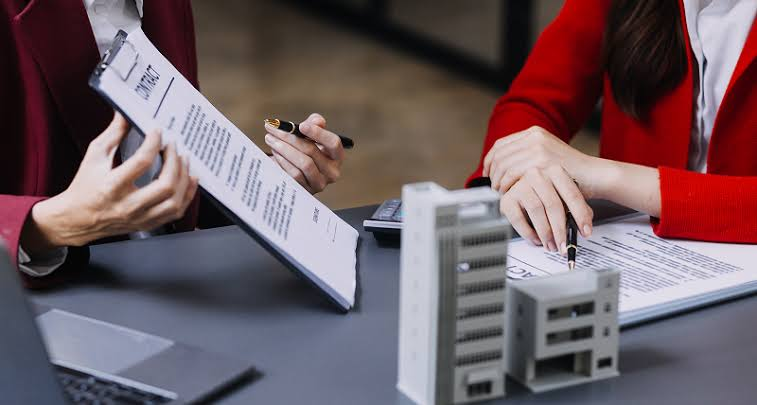
6. Verify the Title and Ownership
A commercial property can look attractive but still have ownership problems.
Before buying, have a qualified property lawyer examine important documents such as:
- Title documents
- Previous ownership records
- Sale deeds
- Encumbrance information, where relevant
- Tax payment records
- Possession-related documents
- Approved plans
- Any existing charges or claims
The exact documents required may differ from one property to another.
A proper legal review can help identify potential problems before you invest a large amount of money.

7. Calculate the Real Cost of Buying
The purchase price is not the complete cost.
Commercial buyers should also calculate possible expenses such as:
- Stamp duty
- Registration charges
- GST, where applicable
- Legal fees
- Loan processing costs
- Brokerage
- Fit-out expenses
- Interior work
- Maintenance deposits
- Equipment and infrastructure costs
- Insurance
- Ongoing maintenance charges
- Property taxes, where applicable
Create a complete budget before paying a booking amount.
Example
Suppose a commercial unit costs ₹1 crore. The actual amount required may be higher after adding applicable taxes, registration expenses, legal costs, interiors and other charges.
This is why buyers should not make decisions based only on the advertised property price.
[IMAGE SPACE: Investor calculating total commercial property purchase cost including price, taxes, registration, loan and interior expenses]
8. Study Rental Income Before Calling It a Good Investment
Many commercial properties are marketed using high expected rental returns.
Ask the seller or broker:
- Is the property already rented?
- What is the current monthly rent?
- Who is the tenant?
- How much time remains on the lease?
- What are the rent escalation terms?
- Who pays maintenance?
- What happens if the tenant leaves?
- Is there a security deposit?
- Are there any unpaid dues?
If the property is vacant, research realistic market rent. Do not calculate returns using an unrealistic future rent.
Basic Rental Yield Formula
Annual Rental Income ÷ Total Property Investment × 100
For example, if your total investment is ₹1 crore and your annual rent is ₹8 lakh:
₹8 lakh ÷ ₹1 crore × 100 = 8% gross yield
However, this is only a simple gross calculation. Your actual return may be lower after expenses, taxes, maintenance, vacancy and financing costs.
9. Check the Tenant and Lease Quality
A rented property may look safer because it already produces income. But the quality of the tenant and lease is extremely important.
Check:
- Tenant’s business profile
- Payment history, where available
- Remaining lease period
- Lock-in terms
- Renewal conditions
- Rent escalation
- Security deposit
- Maintenance responsibilities
- Exit conditions
A high rent from a financially weak tenant may carry more risk than a slightly lower rent from a reliable tenant.
Always review the actual lease documents rather than depending only on verbal information.
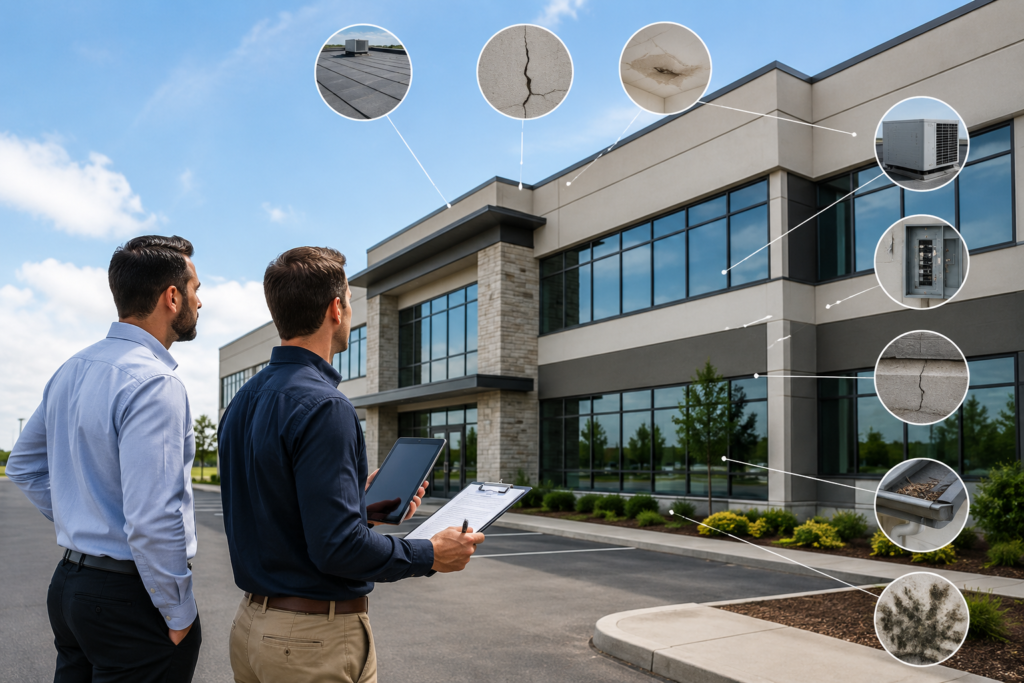
10. Inspect the Building and Physical Condition
Visit the property carefully.
Check:
- Construction quality
- Electrical systems
- Water supply
- Drainage
- Fire safety arrangements
- Lifts
- Common areas
- Parking
- Power backup
- Internet infrastructure
- Entry and security
- Loading facilities, where required
Digital connectivity can also be relevant for modern commercial buildings, especially offices and technology-dependent businesses. India has a regulatory framework relating to rating properties for digital connectivity, showing the growing importance of reliable in-building connectivity.
Do not make a decision based only on a sample office or marketing video.
Commercial Property Investment Risks You Should Understand
Every investment has risk. Commercial property is no exception.
Vacancy Risk
The property may remain empty for months. During this period, the owner may still have to pay maintenance, taxes and loan EMIs.
Tenant Risk
A tenant may delay payments, leave early or face business difficulties.
Location Risk
Business demand can change. A previously popular commercial area may face competition from new business districts.
Oversupply Risk
If many new commercial units are built in the same area, rents and occupancy may be affected.
Loan Risk
A high loan can create pressure if rental income is lower than expected.
Legal Risk
Ownership disputes, approval issues or incorrect land use can create serious problems.
Liquidity Risk
Commercial property may not always sell quickly. A buyer may have to wait for the right purchaser.
Understanding these risks does not mean commercial property is a bad investment. It means you should make a decision with realistic expectations.
Buying Commercial Property for Your Own Business
If you are buying a property for your own business, think beyond investment returns.
Ask:
- Will this location help my business?
- Can customers reach it easily?
- Is there enough parking?
- Will I need more space in the future?
- Does the property create a professional image?
- Are the operating costs affordable?
- Is renting a better option for my business right now?
For a growing startup, leasing may provide flexibility. For an established business with stable needs, ownership may offer more control.
The right choice depends on the business.
Commercial Property vs Residential Property
Both can be useful investments, but they are different.
Commercial Property
Potential advantages:
- Business-focused rental demand
- Potentially higher rental income
- Lease structures may offer defined terms
- Useful for business owners
Potential risks:
- Higher entry cost
- Longer vacancy periods
- More complex tenant and lease checks
- Demand can depend strongly on the local economy
Residential Property
Potential advantages:
- Broader tenant market in many locations
- Easier for many first-time buyers to understand
- Can also be used personally
Potential risks:
- Rental yields may be lower in some markets
- Tenant turnover can occur
- Property value and rent still depend on location and demand
There is no universal answer about which is “better.” The right option depends on your budget, goals, risk tolerance and investment timeline.
How to Finance a Commercial Property
Commercial property financing may be different from a standard home loan.
Before applying, understand:
- Down payment requirement
- Interest rate
- Loan tenure
- EMI amount
- Processing charges
- Prepayment conditions
- Eligibility requirements
- Required business or income documents
Do not choose a property based on the maximum loan you can receive.
Instead, calculate whether you can comfortably pay the EMI even if:
- Rent is delayed
- The property becomes vacant
- Business income decreases
- Unexpected maintenance costs arise
A conservative financial plan can reduce investment pressure.

Due Diligence Checklist Before Buying Commercial Property
Before making the final decision, check the following.
Property and Legal Checks
- Confirm the seller’s ownership
- Review the title documents
- Check previous ownership records
- Verify applicable approvals
- Confirm land-use permission
- Check for outstanding disputes or claims
- Verify taxes and dues
- Review the sale agreement carefully
Project Checks
- Verify RERA information where applicable
- Check the developer’s background
- Review promised facilities
- Confirm possession or completion status
- Compare approved plans with the actual property
Financial Checks
- Calculate the total investment
- Estimate realistic rent
- Include vacancy risk
- Calculate maintenance costs
- Review loan obligations
- Keep an emergency reserve
Market Checks
- Compare similar properties
- Study local rent levels
- Check vacancy levels
- Understand future supply
- Visit the area at different times
A Step-by-Step Process for Buying Commercial Property
Step 1: Define Your Budget
Decide your maximum total investment, not only the property price.
Step 2: Choose the Property Type
Select an office, shop, showroom, warehouse or another suitable category.
Step 3: Research Multiple Locations
Compare at least a few suitable areas based on business demand and connectivity.
Step 4: Shortlist Properties
Compare size, price, rent potential, condition and future prospects.
Step 5: Conduct Market Research
Check actual transactions and realistic rental demand where possible.
Step 6: Review Documents
Get legal documents checked by a qualified professional.
Step 7: Inspect the Property
Physically inspect the unit and building.
Step 8: Review Financial Numbers
Calculate purchase cost, loan, expenses and expected cash flow.
Step 9: Verify Important Registrations
Check relevant project and regulatory information through official sources where applicable.
Step 10: Sign Only After Proper Review
Read every important agreement carefully before signing or transferring money.
Common Mistakes to Avoid
Buying Only Because the Seller Promises High Returns
Always ask how the return was calculated.
Ignoring Vacancy Risk
No tenant can mean no rental income.
Skipping Legal Verification
This can be one of the most expensive mistakes.
Buying in an Area You Do Not Understand
Local business demand matters more than advertising language.
Taking Too Much Loan
A large EMI can become difficult during vacancy periods.
Ignoring Operating Costs
Maintenance and other expenses affect your actual return.
Assuming Every Commercial Property Will Increase Quickly
Property values can rise, fall or remain stable depending on many factors.
How to Make Your Commercial Property Investment More Reliable
A reliable investment process should include:
- Independent legal verification
- Realistic market research
- Conservative rental calculations
- Tenant and lease review
- Full cost calculation
- Loan affordability analysis
- Physical property inspection
- Verification of applicable registrations and approvals
- A clear exit strategy
Google’s guidance on helpful and reliable content emphasizes clear sourcing, demonstrated expertise, accurate authorship and people-first information. These principles are especially relevant for financial and real-estate content, where readers may make important money decisions.
Frequently Asked Questions About Commercial Properties
Is commercial property a good investment?
It can be a good investment when the location, tenant demand, purchase price and financial plan are suitable. However, it also involves risks such as vacancy, tenant problems and higher costs.
What is the best type of commercial property?
There is no single best type. The right property depends on your goal, budget and local market demand.
Is an office better than a retail shop?
It depends on the location and investment purpose. Offices depend on business demand, while retail properties often depend heavily on footfall and visibility.
Should I buy a vacant or rented commercial property?
A rented property can provide immediate income, but you must carefully check the tenant and lease. A vacant property may offer flexibility but also carries vacancy risk.
How much money should I keep aside after buying?
Keep enough funds for possible maintenance, loan payments, taxes and unexpected vacancy. The exact amount depends on your financial situation.
Can I use a commercial property for any business?
Not necessarily. The intended business activity should comply with applicable land-use, building, licensing and local rules.
Should I check RERA before buying commercial property?
Where the project falls under applicable RERA requirements, buyers should verify the project through the relevant official authority and review the information carefully.
Final Summary
Commercial properties can offer opportunities for business use, rental income and long-term investment growth. However, a successful purchase requires careful research.
The most important things to check are:
- Location: Is there real business demand?
- Purpose: Does the property match your business or investment goal?
- Legal Status: Are ownership and approvals properly verified?
- Land Use: Is the intended commercial activity permitted?
- RERA: Verify applicable project information through official sources.
- Cost: Calculate the complete investment, not only the sale price.
- Rental Income: Use realistic rent and include vacancy risk.
- Tenant: Review the tenant and lease carefully.
- Finance: Ensure that the loan and EMI are affordable.
- Exit Plan: Consider future resale and liquidity.
The best commercial property is not simply the one with the highest promised return. It is the property that has strong fundamentals, verified documents, realistic financial numbers and demand that matches your long-term goal.
Key Takeaways
- Commercial properties include offices, shops, showrooms, warehouses and industrial spaces.
- Location and actual business demand are extremely important.
- Always verify title, ownership, land use and applicable approvals.
- Do not rely only on brochures, advertisements or verbal promises.
- Calculate taxes, registration, interiors, maintenance and other costs.
- Check actual rental income and possible vacancy periods.
- Review the tenant and lease before buying a rented property.
- Use professional legal and financial advice for major decisions.
- Make your investment decision based on verified information, not only expected returns.
[IMAGE SPACE: Successful Indian commercial property investor standing outside a modern office and retail complex after completing a well-researched investment]
About the Author
Chotala Homes provides educational real estate content to help buyers, investors and property seekers understand important property decisions. Our aim is to present real estate information in clear and simple English. Readers should still obtain independent legal, financial and tax advice before making a major property purchase.
Disclaimer
This article is for general information only and should not be treated as legal, financial, investment or tax advice. Property laws, regulations, taxes and registration requirements can change. Always verify information with the relevant official authority and qualified professionals before buying or investing in commercial property.
Call to Action
Looking for the right commercial property for your business or investment goals? Explore commercial property options, compare locations and verify important details before making your final decision with Chotala Homes.