
Target Audience: Homebuyers, first-time buyers, families, and property investors
Primary Keyword: Builder Floor
Secondary Keywords: Builder floor in India, builder floor apartment, independent floor, builder floor price, builder floor vs flat, buying a builder floor, builder floor investment
Builder Floor: A Complete Guide to Buying the Right Builder Floor in India
A builder floor is a popular residential property option in India, especially in established and developing urban areas. It can offer many of the advantages of independent living while usually costing less than a large independent house in the same locality.
Unlike a typical apartment project, a builder floor generally refers to an independent residential floor within a low-rise building. Depending on the property and local development rules, a building may have two, three, four, or more residential floors. Each floor may be sold to a separate buyer, while ownership arrangements for the land and common areas depend on the legal structure and documents of the particular property.
Builder floors are popular among families who want more privacy, fewer neighbours, better usable space, parking, balconies, and access to established neighbourhoods.
However, buying a builder floor requires careful checking. A beautiful interior does not guarantee that the property has clear ownership, proper approvals, or legally valid construction.
Before buying, you should understand the property structure, land ownership, construction permissions, floor rights, parking arrangements, maintenance responsibilities, and all applicable documents.
This guide explains everything a buyer should know about builder floors in India, from their meaning and benefits to legal checks, financing, costs, mistakes, and investment considerations.
Table of Contents
- What Is a Builder Floor?
- How Does a Builder Floor Work?
- Builder Floor vs Apartment
- Why Buyers Choose Builder Floors
- Advantages of Buying a Builder Floor
- Possible Disadvantages
- How to Choose the Right Location
- What to Check Before Buying
- Important Legal Documents
- Check Construction Approvals
- RERA and Builder Floors
- Check Land and Ownership Rights
- Parking and Common Areas
- Calculate the Complete Cost
- Home Loans for Builder Floors
- New vs Resale Builder Floors
- Builder Floor as an Investment
- Common Mistakes to Avoid
- Step-by-Step Buying Process
- Summary
- Key Pointers
- Frequently Asked Questions
- Final Thoughts
1. What Is a Builder Floor?
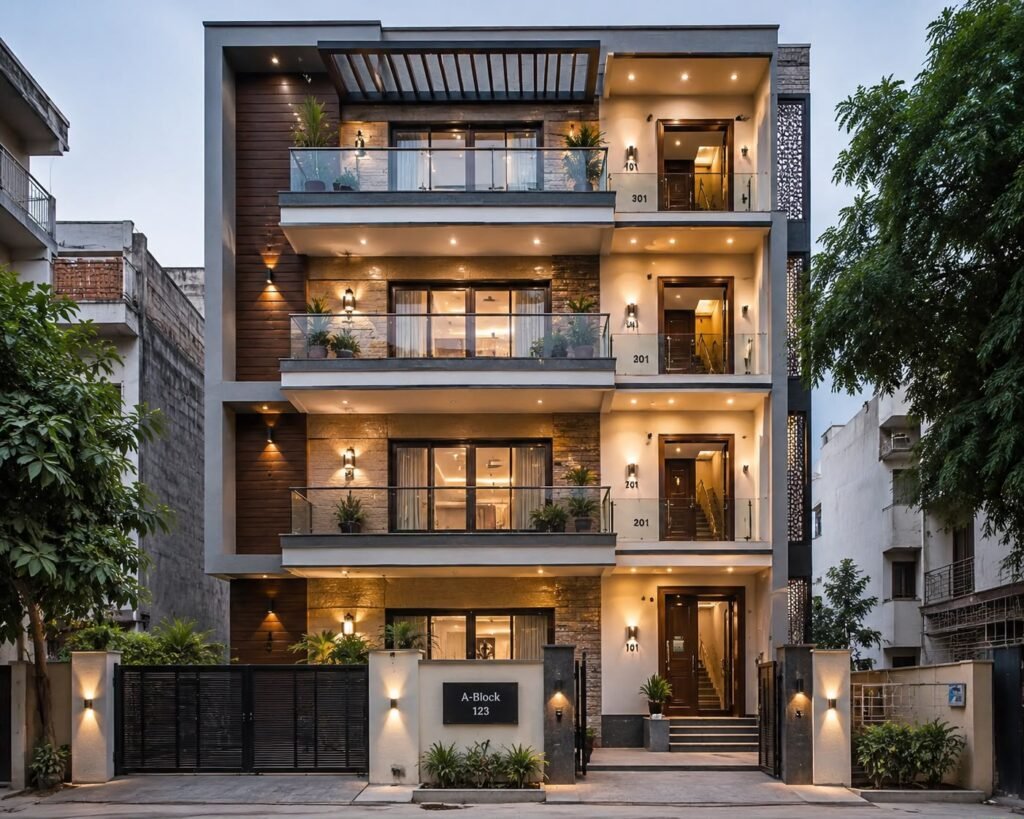
A builder floor is generally a residential unit occupying an independent floor of a low-rise building.
For example, imagine a three-storey residential building:
- Ground floor – one residential unit
- First floor – one residential unit
- Second floor – one residential unit
Each floor can be designed as a separate home.
A builder floor may have:
- 2 BHK configuration
- 3 BHK configuration
- 4 BHK configuration
- Large living room
- Bedrooms
- Kitchen
- Bathrooms
- Balcony
- Parking
- Separate entrance in some properties
- Terrace rights, depending on the agreement and property documents
The exact legal ownership structure varies from property to property. Therefore, buyers should never assume that purchasing a floor automatically means owning the entire land, terrace, parking area, or other parts of the building.
The sale documents should clearly explain what is being purchased.
2. How Does a Builder Floor Work?
A builder floor is different from a conventional high-rise apartment.
In a typical apartment complex, many families live in one or multiple towers. The project may have shared facilities such as:
- Lifts
- Security
- Clubhouse
- Swimming pool
- Gym
- Common gardens
- Parking areas
- Maintenance staff
A builder floor generally has fewer residential units and may provide a more independent living experience.
For example, a family purchasing the first floor may have another family living on the ground floor and another on the second floor.
The building may have shared:
- Entrance areas
- Staircases
- Driveways
- Parking spaces
- Water systems
- Electricity infrastructure
- Other common facilities
The exact arrangement depends on the building.
This is why buyers should understand the ownership and maintenance arrangement before signing the sale agreement.
3. Builder Floor vs Apartment
Many buyers are confused about the difference between a builder floor and a regular apartment.
Here is a simple comparison.
| Feature | Builder Floor | Typical Apartment |
|---|---|---|
| Building size | Usually low-rise | Often multi-storey |
| Number of units | Usually fewer | Usually many |
| Privacy | Often higher | Depends on project |
| Amenities | Usually limited | Often more |
| Maintenance | May be lower | Usually regular society maintenance |
| Community size | Smaller | Larger |
| Independence | Usually higher | More community-oriented |
| Parking | Property-specific | Usually project-specific |
| Location | Often established colonies | Often large developments |
Neither option is automatically better.
The right choice depends on your budget, lifestyle, location, family requirements, and preference for amenities or privacy.

4. Why Buyers Choose Builder Floors
Builder floors have become popular because they combine some features of an independent house with the convenience of an apartment.
Many buyers prefer them because they want:
More Privacy
With fewer families in the building, residents may experience less crowding.
More Usable Space
Builder floors are often designed with larger rooms or layouts compared with similarly priced compact apartments, although this varies significantly by project.
Established Neighbourhoods
Many builder floors are constructed in developed residential colonies where schools, markets, hospitals, roads, and public transport already exist.
Fewer Shared Amenities
Some buyers do not want to pay for large clubhouses, swimming pools, or other amenities they may rarely use.
Independent Lifestyle
A builder floor can provide a stronger feeling of living in an independent home.
5. Advantages of Buying a Builder Floor
1. More Privacy
Fewer residential units can mean fewer shared walls and common spaces.
This can be attractive for families who prefer a quieter lifestyle.
2. Better Space in Some Locations
In certain markets, builder floors can provide relatively large layouts compared with apartments at similar price points.
Always compare the actual carpet area rather than relying only on the quoted super built-up area.
3. Good Residential Locations
Builder floors are often available in established neighbourhoods.
This can give buyers access to:
- Schools
- Markets
- Hospitals
- Restaurants
- Public transport
- Roads
- Parks
4. Independent Feel
Many builder floors provide a separate entrance or floor-level privacy.
5. Potential for Customisation
Some newly constructed builder floors may allow buyers to discuss certain finishes or layouts with the developer, subject to the project’s stage and applicable rules.
6. Smaller Community
People who do not want to live in a large apartment society may prefer a small building.

6. Possible Disadvantages of Builder Floors
Builder floors also have disadvantages.
A buyer should consider them before making a decision.
Limited Amenities
Many builder floors do not have:
- Clubhouses
- Swimming pools
- Gyms
- Large gardens
- Sports facilities
If these are important to your family, an apartment project may be a better choice.
Maintenance Responsibilities
In a smaller building, residents may need to coordinate directly for:
- Cleaning
- Repairs
- Water systems
- Electricity in common areas
- Staircase maintenance
- Security
The exact arrangement should be documented or clearly agreed upon.
Parking Issues
Parking can become a major problem if the rights and allocated spaces are not clearly documented.
Construction Quality
Quality can vary significantly between builders.
A property may look attractive but still have hidden issues such as:
- Waterproofing problems
- Poor plumbing
- Electrical defects
- Structural concerns
- Low-quality materials
Professional inspection can help identify problems before purchase.
Legal Complications
If ownership or construction documents are unclear, the buyer could face serious problems later.
7. How to Choose the Right Location
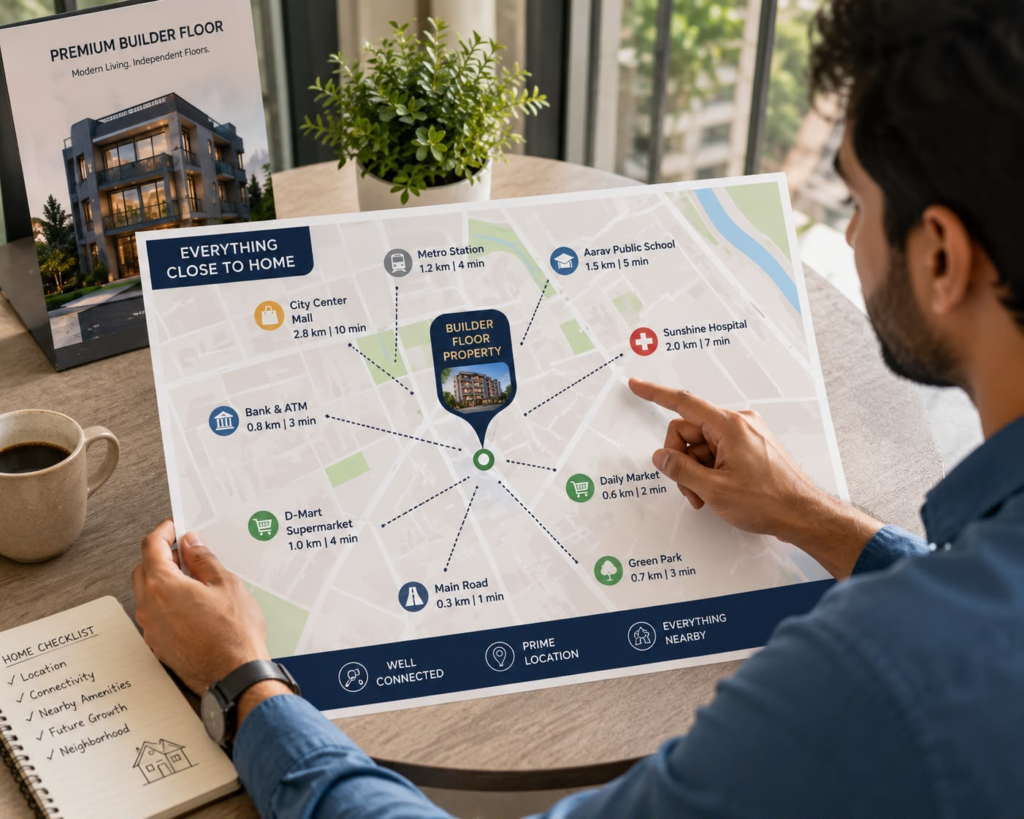
Location is one of the most important factors when buying a builder floor.
A good home should not only look attractive. It should also provide convenient access to everyday needs.
Consider:
Road Connectivity
Check how easily you can reach major roads and highways.
Public Transport
Look for access to:
- Metro
- Bus services
- Auto-rickshaws
- Railway stations, where relevant
Schools
Families with children should check nearby schools and travel time.
Hospitals
Healthcare access is important for every family.
Markets
Daily grocery and household shopping should be convenient.
Employment Hubs
If you are buying for your own use, calculate travel time to your workplace.
Future Development
New roads, transport links, commercial centres, and infrastructure may influence future demand.
However, do not make a purchase based only on rumours about future development. Verify important infrastructure claims through reliable sources.
8. What to Check Before Buying a Builder Floor
Before paying a booking amount, inspect the property carefully.
Check the Construction
Look at:
- Walls
- Ceilings
- Flooring
- Doors
- Windows
- Plumbing
- Electrical fittings
- Water pressure
- Drainage
- Waterproofing
Check Ventilation
Each room should have suitable ventilation and natural light.
Check Water Supply
Ask whether the property receives municipal water, borewell water, or another source.
Check Electricity
Ask about:
- Individual electricity meters
- Backup power
- Common electricity arrangements
Check Parking
Do not rely only on verbal statements.
Understand exactly what parking rights are being transferred or allocated.
Check the Neighbourhood
Visit at different times of the day.
A quiet neighbourhood in the afternoon may be very different at night.
9. Important Legal Documents
Legal verification is one of the most important parts of purchasing a builder floor.
Depending on the property and location, relevant documents may include:
Title Documents
Verify who legally owns the property and the land.
Sale Deed
The sale deed records the transfer of ownership and should be carefully reviewed.
Previous Sale Deeds
For resale properties, review the ownership history.
Encumbrance Records
These can help identify certain registered claims or charges affecting the property.
Approved Building Plan
Check whether the building has been constructed according to the approved plan.
Completion or Occupancy Documents
Where applicable, check relevant completion or occupancy documentation.
Property Tax Records
Verify applicable property tax payments.
Utility Documents
Check electricity and water arrangements.
No-Objection Certificates
Where applicable, relevant NOCs should be verified.
Because property laws and documentation can vary by state and property type, independent legal verification by a qualified property lawyer is strongly recommended.
10. Check Construction Approvals
A buyer should never assume that every floor in a building is automatically legal.
Ask for information about:
- Sanctioned building plans
- Floor permissions
- Construction approvals
- Local development rules
- Completion documents
- Applicable occupancy requirements
An extra floor constructed without the required approval can create serious problems.
Potential issues may include:
- Difficulty obtaining loans
- Problems during resale
- Penalties
- Demolition or enforcement action
- Problems with utilities or municipal records
The exact rules vary by location, so verify them with the relevant local authority.
11. RERA and Builder Floors
RERA is an important consideration for property buyers.
However, buyers should not assume that every builder floor is automatically covered in the same way.
The applicability of RERA depends on factors such as:
- Nature of the project
- Size and number of units
- Development status
- Applicable exemptions
- State-specific implementation
For projects that fall within the applicable requirements, buyers should check the relevant state RERA authority’s records.
The Real Estate (Regulation and Development) Act, 2016 was introduced to improve transparency and protect the interests of homebuyers in covered real estate projects.
Before purchasing from a developer, verify the project’s regulatory status rather than relying only on advertisements or verbal claims.

12. Check Land and Ownership Rights
One of the most important questions is:
What exactly are you buying?
Do not assume that buying a builder floor automatically gives you unlimited rights over:
- The land
- Terrace
- Parking
- Staircase
- Driveway
- Common areas
The sale agreement and other property documents should clearly describe the rights being transferred.
Ask a qualified property lawyer to explain:
- Land share
- Floor ownership
- Common areas
- Parking rights
- Terrace rights
- Maintenance responsibilities
- Future redevelopment rights
Clear documentation can reduce disputes between residents later.
13. Parking and Common Areas
Parking is often a major issue in builder-floor properties.
Before buying, understand:
- Where your vehicle will be parked.
- Whether the parking arrangement is documented.
- Whether it is exclusive or shared.
- Who maintains the driveway.
- Who pays for common repairs.
- How visitors will park.
Do not make a large payment based solely on statements such as “You will definitely get this parking.”
Get important commitments documented.
14. Calculate the Complete Cost
The advertised property price is not necessarily your final cost.
Your overall budget may need to include:
- Property price
- Stamp duty
- Registration charges
- Applicable taxes
- Brokerage
- Legal verification
- Home loan processing charges
- Parking charges, where applicable
- Maintenance deposits
- Interior work
- Furniture
- Appliances
- Moving expenses
For example, if your maximum budget is ₹60 lakh, do not automatically search only for properties advertised at ₹60 lakh.
You may need additional funds for transaction and setup costs.

15. Home Loans for Builder Floors
Financing a builder floor can require additional document checks by the lender.
Banks and housing finance companies may evaluate:
- Borrower’s income
- Credit history
- Property title
- Construction approvals
- Property valuation
- Building documents
- Legal status
A lender’s willingness to finance a property can be useful information, but it should not replace your own legal verification.
Before finalising a property, compare different loan offers.
Look at:
- Interest rate
- Loan tenure
- EMI
- Processing fee
- Prepayment rules
- Other applicable charges
Never take a loan that makes your monthly finances uncomfortable.
16. New vs Resale Builder Floors
Both new and resale builder floors can be good options.
New Builder Floor
Advantages:
- New construction
- Modern fittings
- Less immediate repair work
- Potential customisation in some cases
Things to check:
- Builder reputation
- Construction approvals
- Project documentation
- Construction quality
- Completion timeline
Resale Builder Floor
Advantages:
- Existing construction can be inspected
- Established neighbourhood
- Potential negotiation
- Immediate or faster possession in many cases
Things to check:
- Ownership history
- Outstanding dues
- Property condition
- Renovation requirements
- Previous alterations
- Legal documents
Always compare the complete cost instead of choosing based only on age.
17. Builder Floor as an Investment
A builder floor can also be considered as an investment.
However, property investment should never be based on the assumption that prices will definitely increase.
Evaluate:
Rental Demand
Is there demand from families, professionals, students, or other suitable tenants?
Location
Good connectivity can support long-term demand.
Property Condition
A well-maintained property may be easier to rent and resell.
Future Development
Infrastructure development can influence property demand.
Resale Potential
Consider how easy it may be to find another buyer in the future.
Total Return
Consider both:
- Rental income
- Potential capital appreciation
Also account for:
- Maintenance
- Taxes
- Repairs
- Vacancy
- Brokerage
- Transaction costs
A good investment decision should consider both potential return and risk.
18. Common Mistakes to Avoid
Mistake 1: Buying Only for a Beautiful Interior
A modern interior cannot compensate for unclear legal documents.
Mistake 2: Not Checking the Builder’s Background
Research previous projects, construction quality, and customer experiences.
Mistake 3: Ignoring the Building Plan
An attractive building may still have unauthorised construction.
Mistake 4: Not Checking Land Rights
Understand what share or rights you actually receive.
Mistake 5: Ignoring Parking Documentation
Parking disputes can create problems later.
Mistake 6: Paying Without Proper Documents
Maintain proper receipts and written agreements.
Mistake 7: Taking the Maximum Possible Loan
Bank eligibility is not the same as personal affordability.
Mistake 8: Skipping a Physical Inspection
Always inspect the property personally.
19. Step-by-Step Process for Buying a Builder Floor
Step 1: Set Your Budget
Decide the maximum amount you can comfortably spend.
Step 2: Select the Location
Choose areas based on connectivity and family requirements.
Step 3: Shortlist Properties
Compare multiple builder floors.
Step 4: Visit the Property
Inspect construction, surroundings, parking, water, electricity, and access.
Step 5: Check Documents
Get the legal documents reviewed.
Step 6: Verify Approvals
Check applicable building approvals and regulatory information.
Step 7: Negotiate
Discuss the price and all additional charges.
Step 8: Arrange Financing
Compare loan options if financing is required.
Step 9: Sign the Agreement
Read every important clause before signing.
Step 10: Complete Registration
Complete the required legal and registration process.
Step 11: Take Possession
Collect keys and relevant documents and inspect the property before final handover.
Summary: Is a Builder Floor Right for You?
A builder floor can be an excellent residential choice for people who want more privacy, larger living space, and an independent-home feel without necessarily purchasing an entire independent house.
It can be particularly attractive in established neighbourhoods where buyers want access to schools, markets, hospitals, transport, and other facilities.
However, the property must be evaluated carefully.
Before buying, check:
- Price
- Location
- Carpet area
- Construction quality
- Land ownership
- Title
- Building approvals
- Parking
- Common areas
- Applicable RERA requirements
- Taxes and dues
- Home loan eligibility
- Registration costs
A good-looking builder floor is not necessarily a good property. Legal clarity, construction quality, location, and affordability should all work together.
Key Pointers for Buying a Builder Floor
- Understand exactly what you are purchasing.
- Check the property’s title and ownership history.
- Verify the approved building plan.
- Check applicable construction and occupancy permissions.
- Verify RERA status where applicable.
- Get parking rights documented.
- Understand land-share and common-area rights.
- Inspect construction quality carefully.
- Calculate the complete purchase cost.
- Compare home loan offers.
- Research the builder’s previous work.
- Visit the neighbourhood at different times.
- Do not rely only on verbal promises.
- Use an independent property lawyer for legal verification.
- Choose a property that fits your long-term financial plan.
Frequently Asked Questions About Builder Floors
1. What is a builder floor?
A builder floor is generally an independent residential unit occupying one floor of a low-rise building. Ownership and rights depend on the property’s legal documents.
2. Is a builder floor better than an apartment?
It depends on your needs. Builder floors may offer more privacy and space, while apartments may offer more amenities and organised community management.
3. Are builder floors safe to buy?
They can be, provided the buyer properly verifies title, construction approvals, ownership rights, documents, and other applicable requirements.
4. Do builder floors have RERA registration?
RERA applicability depends on the nature, size, development structure, exemptions, and applicable state rules. Buyers should verify the specific property’s status with the relevant authority.
5. Can I get a home loan for a builder floor?
Financing may be available, but lenders evaluate both the borrower and property. The property’s title, approvals, valuation, and documents can affect loan eligibility.
6. Is parking included with a builder floor?
It depends on the property. Never assume parking is included. Check the agreement and applicable property documents.
7. Can I buy the terrace with a builder floor?
Terrace rights depend on the legal structure and documents of the property. Do not rely on verbal assurances.
8. Should I buy a new or resale builder floor?
Both can work. New properties may offer modern construction, while resale properties allow you to inspect an existing home and potentially negotiate the price.
9. What documents should I check?
Important documents can include title documents, sale deeds, previous ownership records, approved building plans, applicable completion or occupancy documents, tax records, and other relevant approvals.
10. Should I hire a property lawyer?
For a significant property purchase, independent legal advice can help identify ownership, title, approval, and contractual issues before you commit financially.
Final Thoughts
Buying a builder floor can be a smart decision when the property matches your budget, lifestyle, location requirements, and long-term plans.
But do not rush the decision.
Take time to compare properties, inspect construction quality, understand the ownership structure, verify legal documents, check applicable approvals, and calculate the complete cost.
The most important lesson is simple:
Do not buy a builder floor only because it looks good or has an attractive price. Buy after you understand what you are legally purchasing and whether it makes financial sense for you.
If you are searching for a builder floor for your family or as an investment, Chotala Homes can help you explore suitable property options according to your preferred location, budget, and requirements.
[IMAGE SPACE: Happy Indian family receiving keys to their new builder floor from a professional real estate consultant]
Suggested Images for the Article
- Modern builder floor exterior with separate residential floors.
- Family inside a spacious builder floor.
- Builder floor vs high-rise apartment comparison.
- Homebuyer checking a location map.
- Property lawyer reviewing builder floor documents.
- Buyer checking RERA information.
- Couple calculating builder floor purchase costs.
- Construction inspection of a builder floor.
- Real estate consultant showing builder floor options.
- Happy family receiving keys to their new home.
Suggested Internal Links
For your Chotala Homes website, you can internally link this article to:
- Affordable Properties
- Homes
- Contact Us
- About Us
- Property Buying Guide
Suggested External Authority Links
For factual verification, link to official sources such as:
- State RERA authority relevant to the property’s location.
- Ministry of Housing & Urban Affairs.
- Relevant local municipal/development authority.
- Official property registration/land-record authority.
Suggested Social Media Content
Instagram Reel Hook:
“Thinking of buying a builder floor? Stop! Check these 7 things before paying your booking amount.”
Pinterest Title:
“Builder Floor Buying Guide: 15 Things You Must Check Before Buying”
Facebook Post Idea:
“Builder floors can offer privacy, space and an independent-home feel—but only when you check the legal and financial details. Save this guide before buying your next builder floor.”
About the Author
Chotala Homes Editorial Team creates practical real estate content to help buyers understand property options, documents, financing, locations, and important steps involved in buying a home. The content is intended for general educational purposes. Buyers should independently verify property, legal, financial, regulatory, and government-related information before making a purchase.